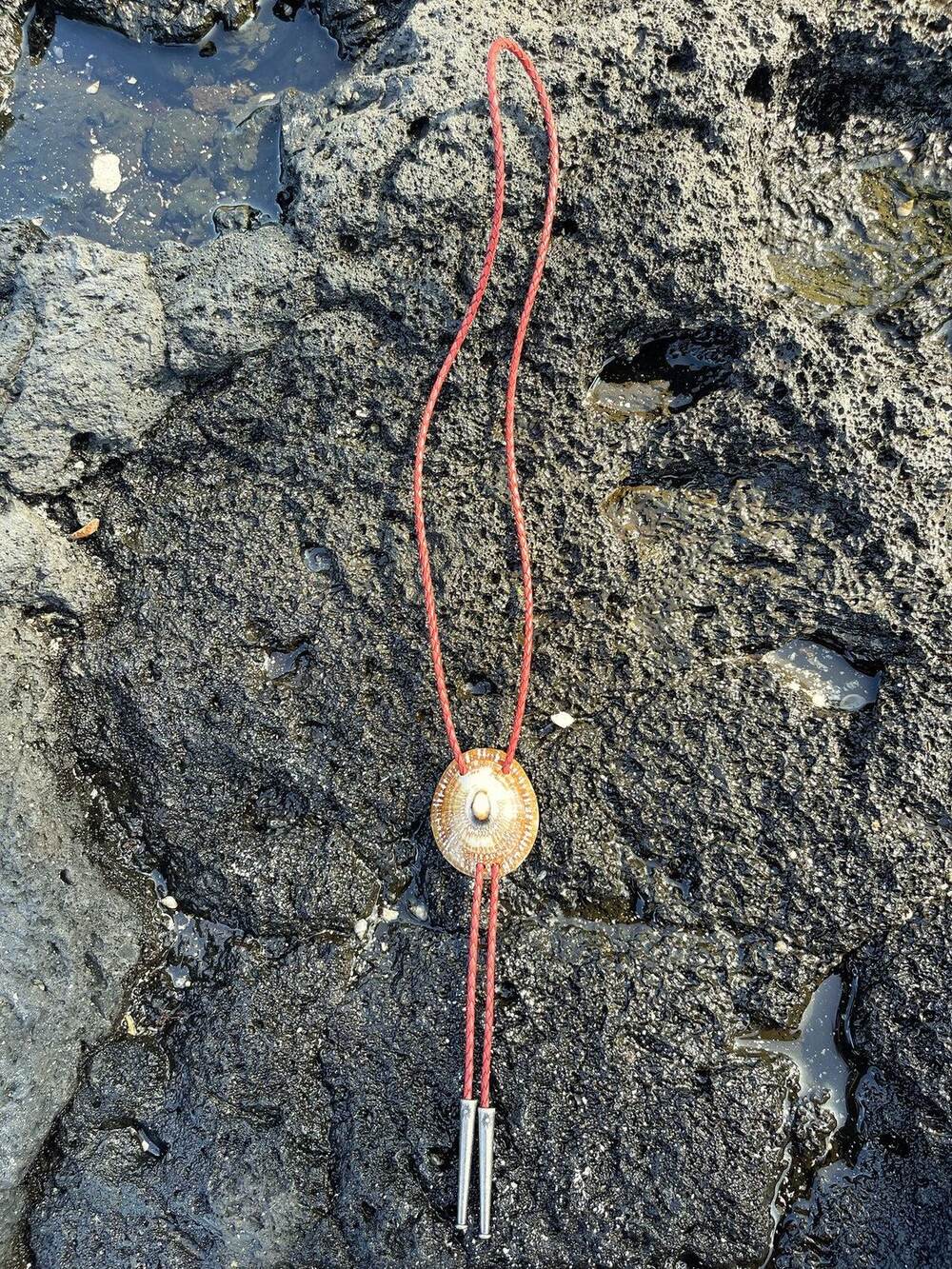
Before a bolo tie ever rests at your collar, it carries almost a century of story. It's one of the few pieces of neckwear that's truly American in origin — born in the West, raised by master silversmiths, and worn today everywhere from ranch country to the red carpet. Here's where it came from, and how it found its way into my work here in Hawaiʻi.
Born in the American West
The bolo tie as we know it took shape in the American Southwest in the late 1940s. By most accounts, an Arizona silversmith named Victor Cedarstaff is credited with popularizing — and later patenting — the idea: a decorative slide threaded onto a braided cord, finished with metal tips. The often-told story has him riding the range, slipping his hatband around his neck to keep from losing it, and realizing the silver buckle made a handsome ornament. Like many good origin tales, it's part history and part legend — but the timing and the place are right.
The name likely comes from the boleadoras, the braided lariat with weighted ends used by gauchos in South America. Shorten it, and you get "bolo."
Made into an art by Native American silversmiths
The bolo might have stayed a novelty if not for the extraordinary silver-and-stone work of Native American artisans of the Southwest. Zuni, Navajo, and Hopi silversmiths brought generations of craft to the slide — turquoise, coral, inlay, and intricate silverwork — and elevated the bolo into genuine wearable art. Many of the most prized vintage bolos come from these traditions, and they remain highly collectible today. It's a craft to deeply admire and respect — and one I credit openly, because the spirit of the bolo owes so much to it.
"The bolo is one of the few ties that began as something to wear while you worked."
Official neckwear of the West
The bolo's standing is written into law in more than one state:
- Arizona named the bolo tie its official state neckwear in 1971.
- New Mexico followed, recognizing the bolo as its official state tie.
- Texas too adopted the bolo as its official state tie.
From rodeo arenas and country stages to courtrooms and weddings, the bolo became shorthand for a certain kind of confident, independent style — formal enough to dress up, easy enough to live in.
From the desert to the shore
What draws me to the bolo is exactly this: it began as something useful and personal, and it has always carried the character of where it's made. The Southwest gave it turquoise and silver. Here on the Big Island, I give it the sea — a single ʻopihi or shell, gathered and hand-polished, most often slid onto a cord with no clasp at all.
It's not a Hawaiian tradition, and I'd never claim it as one. It's my own fusion: the honest, working spirit of the Western bolo, married to the quiet beauty the tide leaves behind on these shores.
Want to wear the story? Every Holo Holo Bolo is one of a kind — a piece of the bolo's long history, finished by hand and made only once.
— Aaron