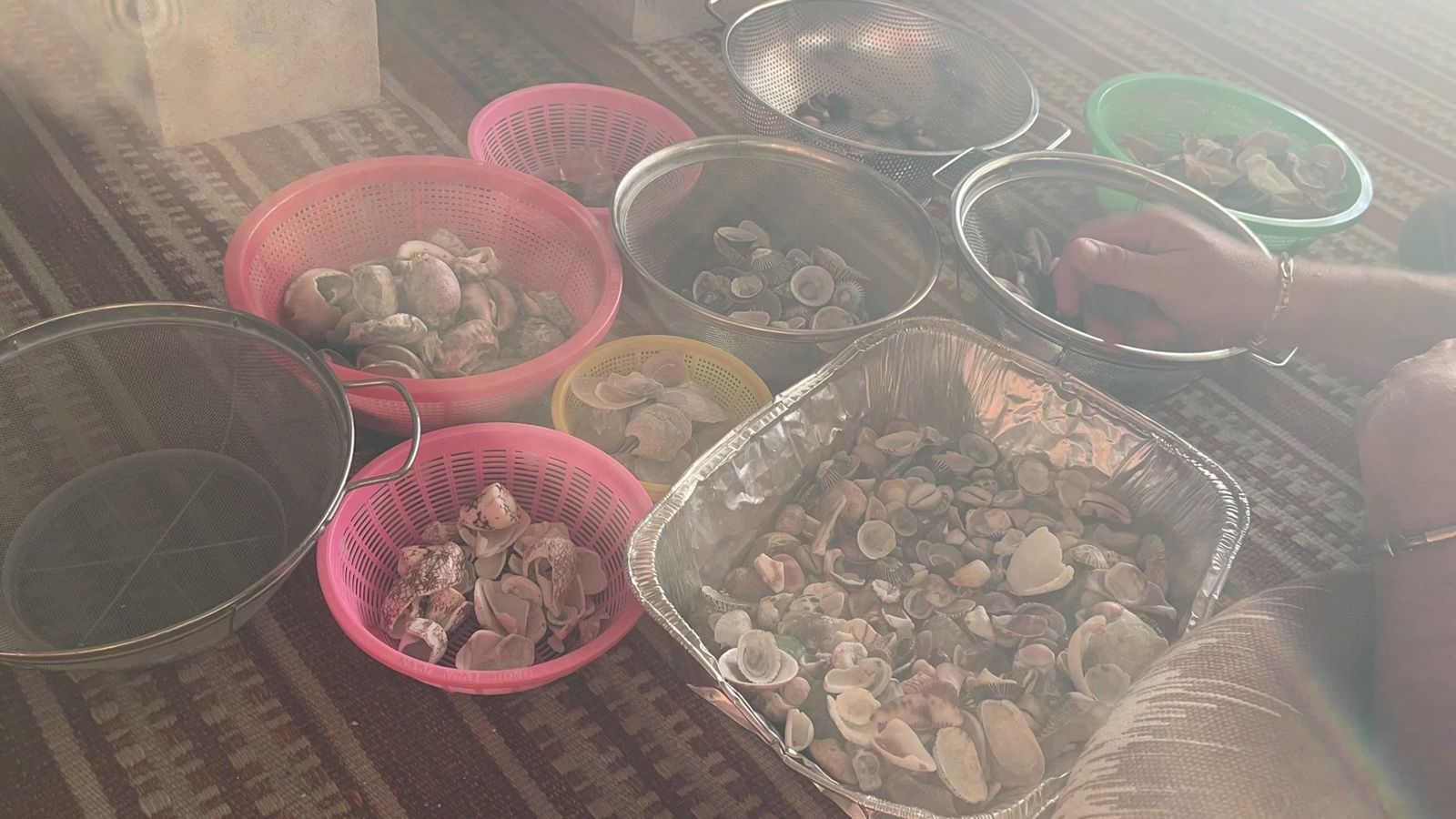
A day of collecting ends the same way every time: one bin, heavy with shells, set down and left alone until I have the energy to deal with it. This batch came from several Hawaiʻi Island shores over a few outings. Every shell in it was found empty — the animal long gone, the shell rolled and worn by the surf. That is the only kind I take.
The bin
The bin is a mess in the best way. Cowries and cones, sand, bits of coral, a few pieces I only picked up because the light was good. Nothing in it looks like much yet. Most of what makes a shell worth keeping is hidden under a chalky skin at this stage, so I try not to judge anything until it has been cleaned.
Sorting by kind
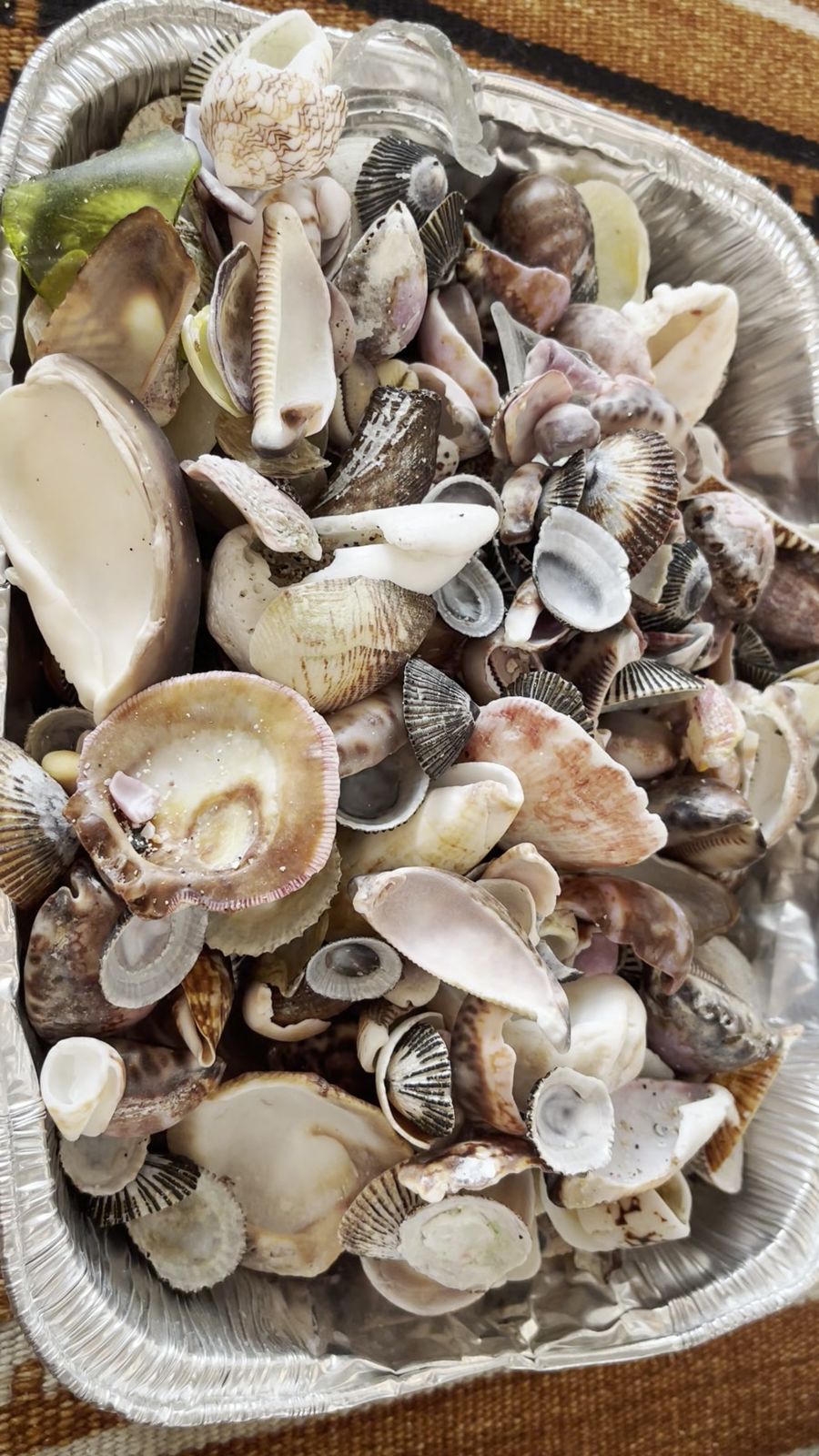
I tip the bin out a handful at a time and sort by kind into tubs — cowries here, cones there, and the broken pieces in a tub of their own, because a broken shell can still be a beautiful part of a mosaic. It is slow, and it is my favourite part of the process after the collecting itself, because it is the first time I really look at each shell. Some go straight into a "not sure" pile. Some I turn over three or four times. If you want to know what you are looking at, my guide to Hawaiian shells covers the ones that turn up most often.
A few seconds in the acid
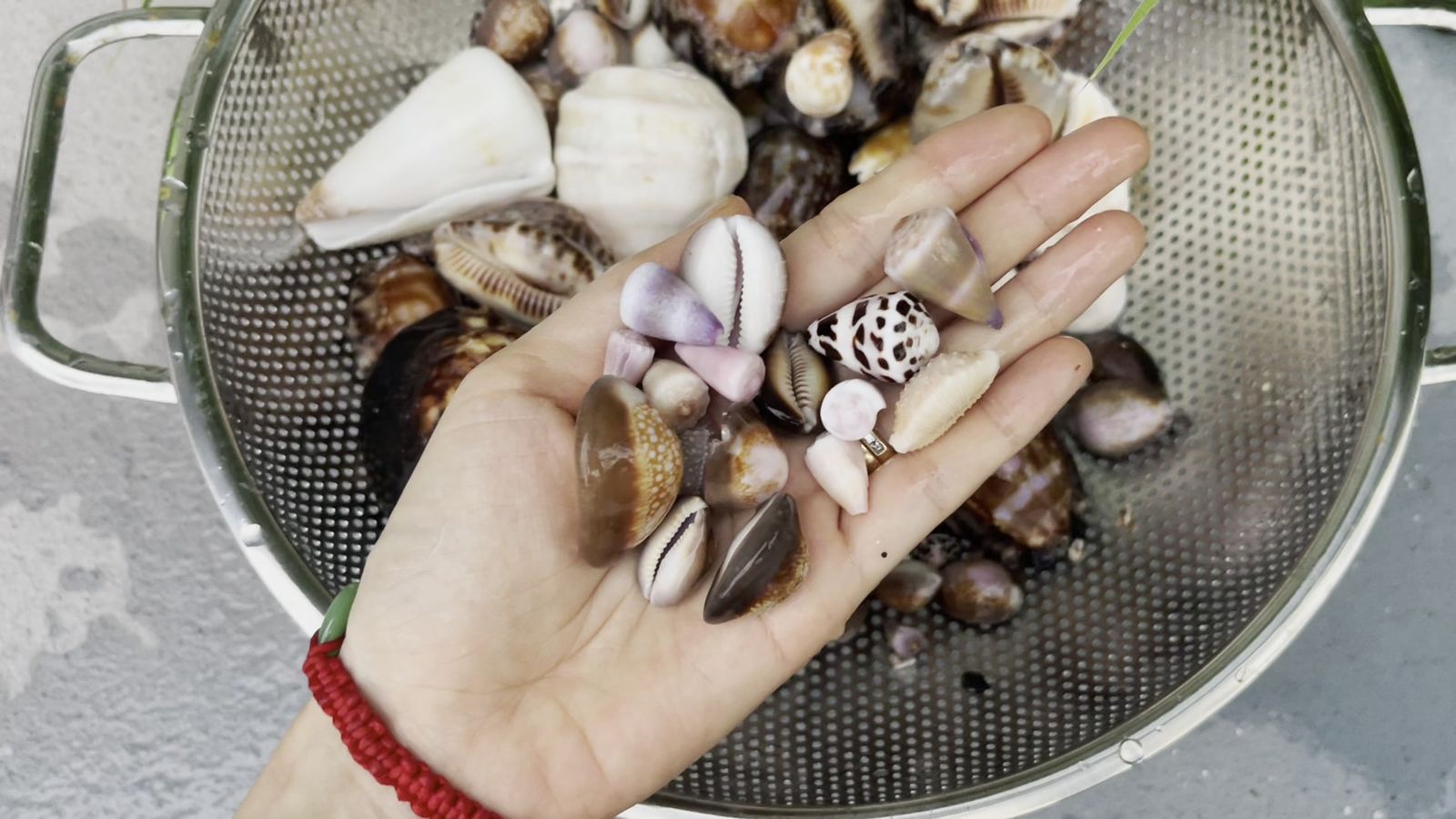
Then the cleaning. A few seconds in diluted muriatic acid — gloves on, outdoors, rinsed right away. Seconds, not minutes. The acid lifts the dull outer layer and the crust the ocean left behind, and it does not need any longer than that. Leave a shell in and you start eating the shell itself. I dip a small batch, watch it fizz, and pull it out. This is the step people ask about most, and it is the one I would tell anyone to respect. It is not a soak. It is a dip.
Rinse and dry
Straight from the acid into fresh water, a good rinse, and then out in the shade to dry. Wet, the shells look their best — every colour saturated, every line sharp. Dry, they go a little flat again, and that is fine. The polishing wheel brings it back for good. If you want to see what happens next, Lapidary 101 walks through it one grit at a time.
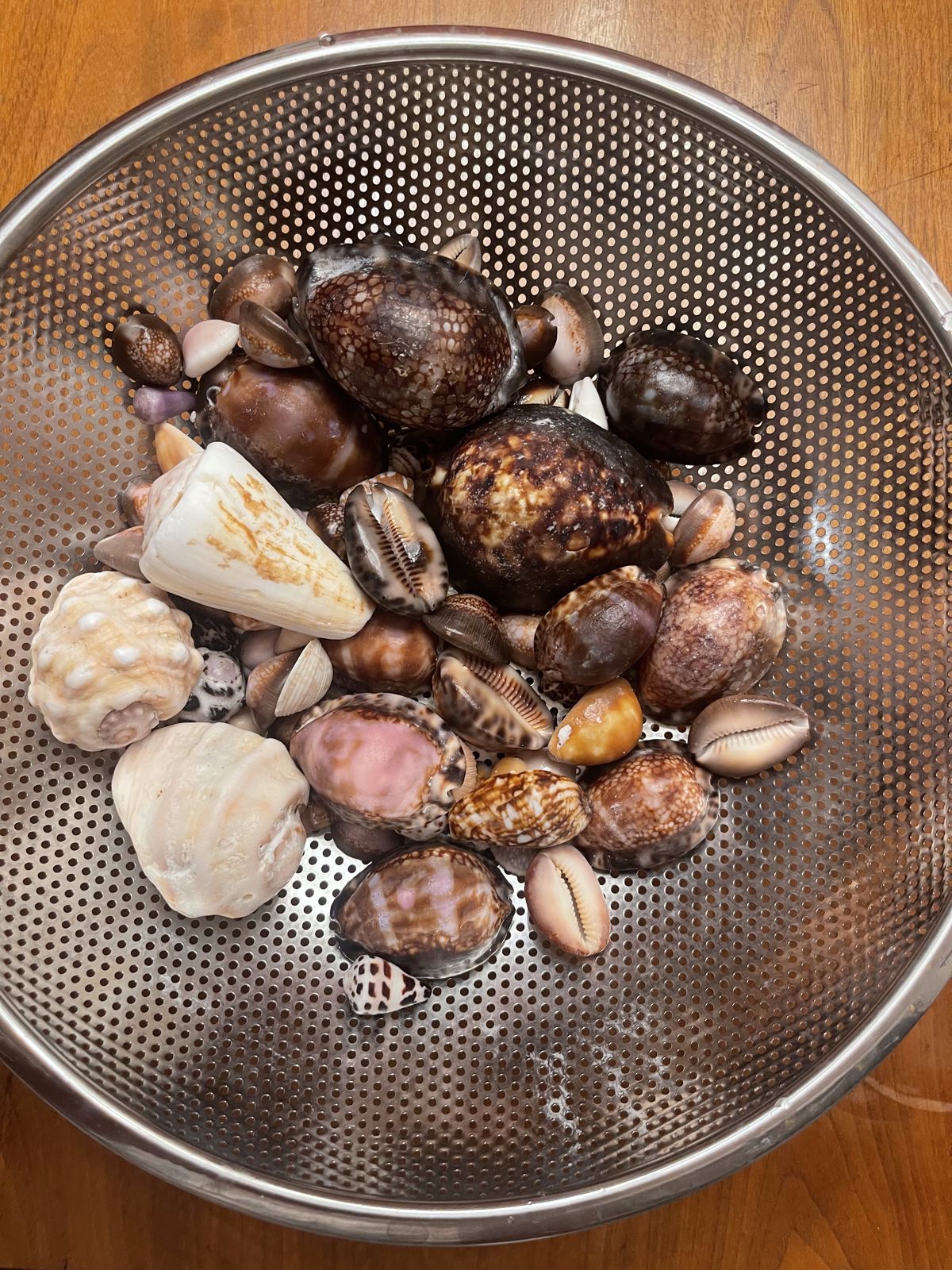
"The shore gives. The rest is patience and a bit of housekeeping."
Put away
Once dry, everything goes back into the tubs, by kind, with a lid. Some of these will become bolo ties. Some will end up in shell art. Many will sit for a year or more before I find the right use for them, and a few will never be used at all — kept because I like them. I do not decide any of that on sorting day. Sorting day is just about getting them clean, sorted, and ready, so that when an idea shows up, the shell is already waiting.
— Aaron